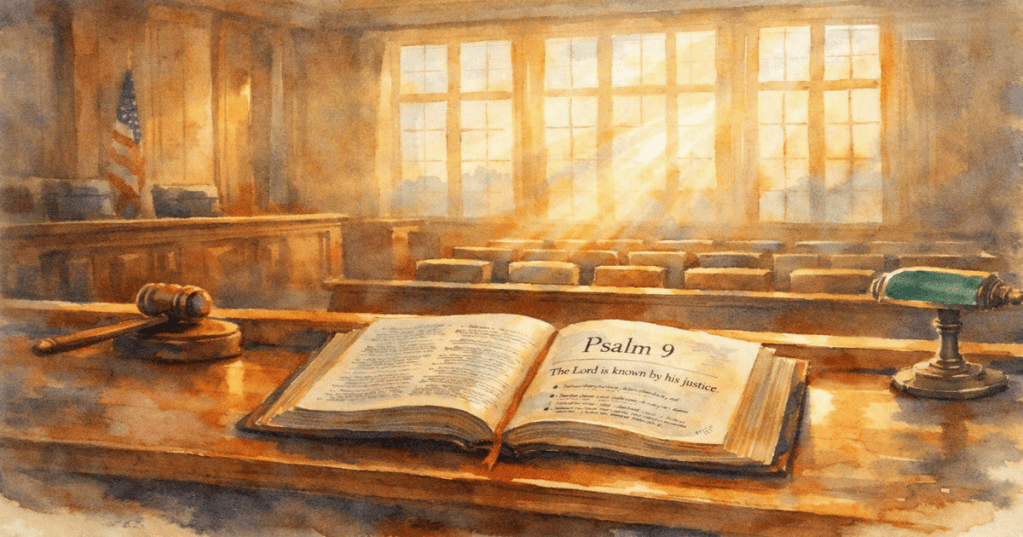
| Psalm 9:15-20, Psalm 10:12 and Psalm 10:17-18 There is a rhythm in these verses that mirrors the human condition. We see arrogance, frailty, and need — not as accusations, but as realities Scripture refuses to ignore. Psalm 9 does not speak from a distance; it speaks from within the human story. It names what we often hide. It reveals what we often overlook. And in doing so, it invites us into a deeper honesty before God. The Pit and the Pattern When the psalmist speaks of nations falling into the pit they made, he is not describing a sudden act of divine punishment. He is describing the quiet return of choices — the way pride loops back, the way injustice circles around, the way hidden snares eventually catch the one who set them. This is not cruelty; it is clarity. It is the unveiling of truth. God’s justice is often revealed not in thunder, but in consequence. Not in spectacle, but in the slow unfolding of what has been sown. And this is meant to teach us — not frighten us. It reminds us that our actions carry weight, our motives shape paths, and our choices echo longer than we expect. The Forgotten and the Remembered Then the psalm turns. It moves from arrogance to need, from forgetting to remembering. Those who forget God drift into their own emptiness, but the needy — the overlooked, the burdened, the ones who feel small — are not forgotten. Not eventually. Not someday. Even now. This is the heartbeat of the passage: God’s awareness is immediate. His compassion is present. His attention is not delayed. The world may overlook the vulnerable, but God does not. He sees the trembling hand, the quiet ache, the unspoken prayer. And His seeing becomes hope — not abstract hope, but the kind that steadies the soul. The Grounding Moment Finally, the psalm calls out: “Arise, Lord… let them know they are only human.” This is not a rebuke; it is a grounding. It is the gentle reminder that we are limited — and that our limits are gifts. Humility is not humiliation. It is clarity. It is the posture that allows us to see rightly, to walk wisely, to stand honestly before God. To know we are “only human” is to remember that we are held. We are guided. We are dependent on mercy already given. We are shaped by a Way already made. This grounding does not diminish us; it restores us. It brings us back to the place where trust grows, where pride loosens, where perspective returns. The Blessing in the Middle Across these verses, a quiet truth emerges: God meets us in our condition — not after we fix it, but within it. He meets arrogance with consequence, frailty with compassion, and pride with perspective. He meets need with remembrance. He meets humanity with mercy. And in that meeting, we find the blessing that steadies the day. Be a blessing today. |
The Pit and the Pattern (vv. 15–16)
The nations have fallen into the pit they made.
What was set in motion has returned.
The snare they hid has found their own feet.
This is not the thunder of final judgment—
it is the quiet unfolding of choices.
God remains just, not by sudden wrath,
but by the steady revealing of truth.
Every motion bears its echo.
Every hand meets what it has shaped.
The Forgotten and the Remembered (vv. 17–18)
Those who forget God fade into their own shadow,
but the needy are not lost in the dark.
There is contrast—but also hope.
Those in need are seen.
Not eventually—but even now.
God’s awareness is not delayed.
He bends toward the cry,
He holds the trembling heart,
He remembers the ones the world forgets.
The Grounding Moment (vv. 19–20)
Arise, Lord—
let the proud remember they are only human.
This is the grounding moment.
We are reminded of our limits,
not to diminish, but to bring perspective.
Humility clears the fog.
It steadies the soul.
It teaches us to stand rightly—
not above, but before.
And in that standing, we find mercy again.
We find the Way already given.
We find the blessing that humbles and heals.
Be a blessing today.


