
• Nothing Is Hidden

    Nothing Is Hidden

    Psalm 10:7–11
    Psalm 10 gives us an uncomfortable picture of a person who believes he can cause harm without consequence. His words wound, the vulnerable suffer, and beneath it all rests a dangerous assumption: God does not see. We may never say those words aloud, but whenever we believe something does not matter because nobody knows about it, we come dangerously close to the same mistake. Hidden from others does not mean hidden from God.

    Yet there is another side to God’s seeing. The person who has been hurt in secret is also seen. The tear shed when no one was there, the cruel word nobody else heard, the loneliness others overlooked, none of these disappears simply because the world failed to notice. This is why the poem says, “God sees the tear no one remembers.” There is comfort in knowing that the God who sees what is wrong also sees the person who has been wronged. No life becomes invisible to Him.

    But we should be careful not to read this Psalm only as a description of somebody else. God sees us too. He sees beyond the person we present to the world and knows what lives within the quiet places of our hearts. That truth might frighten us if we believe God is merely searching for reasons to condemn. Grace tells a better story. Being fully known by God means we no longer need to pretend. Truth can expose what is wrong without placing anyone beyond the reach of mercy. Nothing is hidden, but no one is hidden from grace either.

    So the question becomes not simply, “Does God see?” but, “What will we do knowing that He does?” We can let truth make us more honest, mercy make us more compassionate, and grace teach us to notice people we once overlooked. May our words become a shelter instead of a wound. May our hands bring help rather than harm. And when someone beside us is hurting, may we refuse to look away. Having been fully seen and still met by grace, be a blessing today.

    Nothing Is Hidden

    There are words that leave no bruise,
    Yet wound the heart and trouble sleep;
    There are deeds done out of sight
    And secrets hidden dark and deep.

    We tell ourselves that no one knows,
    That silence means the wrong is gone;
    We close the door, we dim the light,
    And think that life will carry on.

    But hidden things are hidden only
    From the limits of our sight;
    God sees the tear no one remembers,
    God sees the wrong concealed by night.

    He sees the one whose voice was taken,
    Hears the cry we did not hear;
    Finds the lonely and forgotten,
    And draws the wounded heartline near.

    And He sees us just as clearly,
    Every shadow, every scar;
    Not the face we show each other,
    But the truth of who we are.

    What mercy lives within that knowing:
    Nothing covered, nothing blurred.
    Still His grace is not withdrawn from us,
    Still His mercy has the word.

    For truth need not become a weapon,
    Nor light exist to bring us shame;
    Truth can open doors long fastened,
    Grace can call us each by name.

    So let our words become a shelter,
    Let our hands bring help, not pain;
    Let the ones once lost in shadows
    Know they have been seen again.

    Nothing hidden.
    Nothing wasted.
    No one lost beyond His sight.
    May the grace by which God sees us
    Teach us how to walk in light.

    And when we see another hurting,
    May we never turn away.
    Having known the eyes of mercy,
    May we be a blessing today.

    Listen to “Nothing is Hidden” on YouTube

    Music Catalog


  • What Cannot Be Shaken

    What Cannot Be Shaken

    Psalm 10:3–6
    There is a confidence that looks like strength but is really blindness. The person pictured in Psalm 10 boasts about what he wants and becomes so certain of himself that he believes nothing will ever shake him. His problem is deeper than prideful words. He has built his sense of security without God.

    When life is going well, it can be easy for any of us to do the same. We begin trusting our plans, our possessions, our abilities, or even our own goodness, forgetting how quickly the things we depend upon can change. That is why the lyric says, “Yet sand is sand, though paved with gold.” Something does not become a firm foundation simply because it looks impressive. Wealth cannot promise tomorrow. Success cannot protect us from sorrow. Even our best judgment sometimes fails us. Scripture does not tell us this to leave us frightened or insecure. It invites us to place our confidence somewhere better. There is freedom in admitting that we were never meant to hold the whole world together. And there is grace even here.

    The proud person is not beyond God’s concern, nor should we read this Psalm merely to identify the faults of somebody else. Pride visits all of us. We have all trusted ourselves too much at times, and we have all forgotten the One beneath our feet. Yet God’s grace is greater than our pride. His mercy is not a prize reserved for those who have managed to become worthy of it. Grace comes to us because grace reflects the heart of God.

    So our confidence changes. We no longer have to say, “Nothing will shake me.” Instead, we can say, “Whatever shakes me, God remains faithful.” That is a very different kind of strength. It does not boast. It does not need to stand above another person. It receives grace with gratitude and then carries that grace into the lives of others. Having freely received mercy, may we freely give it. Be a blessing today.

    What Cannot Be Shaken

    We build our walls and call them strong,
    We praise ourselves when things go right;
    We walk as though the road were ours
    And never think we need Your light.

    We say, “Tomorrow will be mine.
    No storm will ever reach my door.”
    But pride can build upon the sand
    And never know there must be more.

    For what is strength without the truth?
    What good is ground that will not hold?
    The proud may boast of where they stand,
    Yet sand is sand, though paved with gold.

    Teach us the strength that does not boast,
    The quiet heart that trusts Your way;
    The grace You give is not for some,
    Your mercy reaches all today.

    When we are proud, still You are near.
    When we are lost, You seek us still.
    Your grace is greater than our pride,
    Your love is stronger than our will.

    So let our confidence be this:
    Not what we own or what we do,
    But that beneath our shifting feet
    There stands the faithfulness of You.

    Let truth, not boasting, mark our lives.
    Let mercy shape the words we say.
    And having freely tasted grace,
    May we become a blessing today.

    Listen to “What Cannot Be Shaken” on YouTube

    Music Catalog


    Logo of Impartial Grace featuring a stylized tree with two human faces, accompanied by the text 'Impartial Grace' and the copyright notice.
  • by James R. Barnes

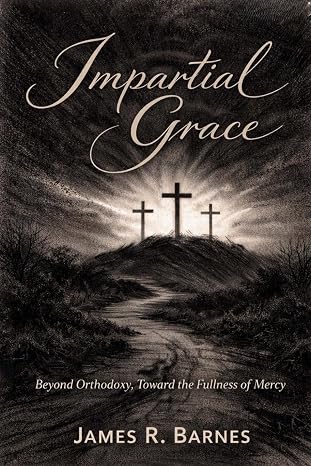
    In Impartial Grace, James R. Barnes invites readers to step through the narrow gate of Christ’s teaching and discover that divine mercy is far wider than tradition has imagined. Drawing from the Sermon on the Mount, Barnes re‑examines the words “Enter ye in at the strait gate” and reveals how Jesus’ warning, often used to limit grace, actually illuminates its impartial triumph.

    Book cover of 'Impartial Grace' by James R. Barnes, featuring three crosses on a hill against a dramatic, cloudy sky with the subtitle 'Beyond Orthodoxy, Toward the Fullness of Mercy'.

    Through careful reading of Matthew 7 and dialogue with voices such as John Wesley, Charles Spurgeon, and the early Church, Barnes shows that the narrow gate is not a barrier but a passage — a call to humility, surrender, and love. The gate is narrow because pride cannot fit through it, yet it opens onto a landscape of boundless mercy. Judgment, in this vision, is not God’s retaliation but His restoration: the fire that purifies rather than destroys.

    Impartial Grace bridges centuries of theological tension between holiness and mercy. Barnes demonstrates that orthodoxy and grace are not rivals but companions — that the holiness Wesley preached and the mercy Christ embodied converge in the impartial love of God. The book challenges readers to lay down self‑righteousness, to see judgment as healing, and to trust the Father who “gives good gifts to those who ask Him.”

    Written in a pastoral yet scholarly voice, Impartial Grace speaks to theologians, pastors, and seekers alike. It offers a fresh reading of familiar texts, a reconciliation of justice and compassion, and a vision of redemption that refuses to leave anyone behind.

    For those weary of narrow religion yet hungry for truth, Impartial Grace opens the gate to a faith both ancient and new — a faith where orthodoxy meets its fulfillment in the fullness of mercy.

  • When You Seem Far Off

    When You Seem Far Off

    “Why, O Lord, do you stand far off? Why do you hide yourself in times of trouble? In arrogance the wicked hotly pursue the poor; let them be caught in the schemes they have devised.” — Psalm 10:1-2 (LSB)

    There are moments when God feels distant. Not absent in doctrine, but distant in experience. The psalmist does not hide that. He begins not with praise, but with a question: Lama? Why? Why do You stand afar off? Why hide in times of distress?

    This is not irreverence. This is reverent honesty. Scripture gives us language for the ache – permission to bring the unedited prayer into the presence of God.

    And he immediately grounds that felt distance in something he sees: the wicked, in pride, hotly pursuing the afflicted. The poor, the helpless, the fatherless – words that will return again and again in this psalm – are being hunted, caught in nets, crushed by schemes.

    The psalmist names both things at once: a vertical question – Lord, where are You? – and a horizontal grief – look what is happening to the poor. Faith does not deny either. It holds them together and brings them to God. The honest question is not the end of the journey; it is part of the journey. Later in this same psalm, the prayer will turn: “You have seen it… You have been the helper of the orphan. Arise, O Lord; do not forget the afflicted.” (v.14,12). But it starts here, in the raw, unfiltered cry.

    If you are there today, you are in good company.

    Why do You stand far off, O Lord,
    When trouble gathers like a cloud?
    Why is Your face hidden in this hour,
    When prayers feel thin and faith feels loud?

    I do not turn from You with this asking,
    I turn to You because I can.
    You let me bring the question whole,
    You are not threatened by honest man.

    Meanwhile the proud pursue the poor,
    Their schemes laid out like hidden nets.
    Yet even here, You still behold,
    You do not turn, You don’t forget.

    So I will leave my “why” with You,
    Not as a doubt, but as a trust.
    For You who hears the humble’s hope,
    Will not abandon dust to dust.

    Listen to “When You Seem Far Off” on YouTube

    Music Catalog


  • Only Human

    Only Human

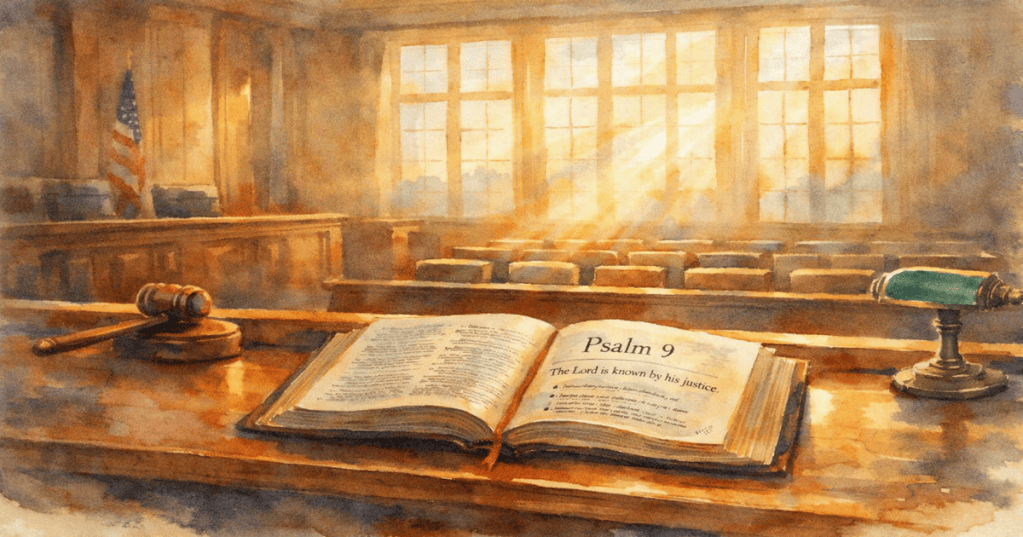
    Psalm 9:15-20, Psalm 10:12 and Psalm 10:17-18 There is a rhythm in these verses that mirrors the human condition. We see arrogance, frailty, and need — not as accusations, but as realities Scripture refuses to ignore. Psalm 9 does not speak from a distance; it speaks from within the human story. It names what we often hide. It reveals what we often overlook. And in doing so, it invites us into a deeper honesty before God.

    The Pit and the Pattern When the psalmist speaks of nations falling into the pit they made, he is not describing a sudden act of divine punishment. He is describing the quiet return of choices — the way pride loops back, the way injustice circles around, the way hidden snares eventually catch the one who set them. This is not cruelty; it is clarity. It is the unveiling of truth.

    God’s justice is often revealed not in thunder, but in consequence. Not in spectacle, but in the slow unfolding of what has been sown. And this is meant to teach us — not frighten us. It reminds us that our actions carry weight, our motives shape paths, and our choices echo longer than we expect.

    The Forgotten and the Remembered Then the psalm turns. It moves from arrogance to need, from forgetting to remembering. Those who forget God drift into their own emptiness, but the needy — the overlooked, the burdened, the ones who feel small — are not forgotten. Not eventually. Not someday. Even now.

    This is the heartbeat of the passage: God’s awareness is immediate. His compassion is present. His attention is not delayed.

    The world may overlook the vulnerable, but God does not. He sees the trembling hand, the quiet ache, the unspoken prayer. And His seeing becomes hope — not abstract hope, but the kind that steadies the soul.

    The Grounding Moment Finally, the psalm calls out: “Arise, Lord… let them know they are only human.” This is not a rebuke; it is a grounding. It is the gentle reminder that we are limited — and that our limits are gifts. Humility is not humiliation. It is clarity. It is the posture that allows us to see rightly, to walk wisely, to stand honestly before God.

    To know we are “only human” is to remember that we are held. We are guided. We are dependent on mercy already given. We are shaped by a Way already made. This grounding does not diminish us; it restores us. It brings us back to the place where trust grows, where pride loosens, where perspective returns.

    The Blessing in the Middle Across these verses, a quiet truth emerges: God meets us in our condition — not after we fix it, but within it. He meets arrogance with consequence, frailty with compassion, and pride with perspective. He meets need with remembrance. He meets humanity with mercy. And in that meeting, we find the blessing that steadies the day.

    Be a blessing today.

    The Pit and the Pattern (vv. 15–16)

    The nations have fallen into the pit they made.
    What was set in motion has returned.
    The snare they hid has found their own feet.
    This is not the thunder of final judgment—
    it is the quiet unfolding of choices.
    God remains just, not by sudden wrath,
    but by the steady revealing of truth.
    Every motion bears its echo.
    Every hand meets what it has shaped.

    The Forgotten and the Remembered (vv. 17–18)

    Those who forget God fade into their own shadow,
    but the needy are not lost in the dark.
    There is contrast—but also hope.
    Those in need are seen.
    Not eventually—but even now.
    God’s awareness is not delayed.
    He bends toward the cry,
    He holds the trembling heart,
    He remembers the ones the world forgets.

    The Grounding Moment (vv. 19–20)

    Arise, Lord—
    let the proud remember they are only human.
    This is the grounding moment.
    We are reminded of our limits,
    not to diminish, but to bring perspective.
    Humility clears the fog.
    It steadies the soul.
    It teaches us to stand rightly—
    not above, but before.

    And in that standing, we find mercy again.
    We find the Way already given.
    We find the blessing that humbles and heals.

    Be a blessing today.

    Listen to “Only Human” on YouTube

    Music Catalog


    Logo of Impartial Grace featuring a tree and two human heads silhouette next to the text 'Impartial Grace'.
  • Steeled by the Mercy Given
    Psalm 9:13–14 There are moments in the life of faith when the heart feels pressed, when the enemy seems close, and when the weight of trouble makes it hard to lift your eyes.

    Psalm 9 does not hide from those moments. Instead, it teaches us how to stand in them — not by our strength, but by remembering what God has already given.

    David’s prayer begins with a plea: “Have mercy on me.” But the request is not only for relief. It is for purpose. It is for the strength to keep telling of God’s praise, even from the low places. Mercy is not simply rescue; it is renewal. It is the hand of God reaching into the pit so that the life He lifts up can still point toward His goodness.

    This passage invites us to gather hope in Him — not the thin hope of wishful thinking, but the solid hope that comes from knowing God has already acted. He has already shown mercy. He has already made a Way. He has already proven Himself faithful in the places where we feared we would fall. That memory becomes strength. It becomes resolve. It becomes the quiet courage to stand firm when the enemy presses in.

    To “tell of His praise” is not a task reserved for the triumphant; it is the testimony of the rescued. It is the voice of someone who has seen God’s hand in the dark and refuses to forget it. When we speak of His goodness, even while waiting for deliverance, we are steeling ourselves against the enemy. We are anchoring our hearts in what is true. We are choosing to let our lives point toward the One who lifts us up.

    This reflection rises from that place — the place where need meets purpose, where mercy meets resolve, where hope becomes a shield, and where testimony becomes strength. Be a blessing today.

    Have mercy on me, Lord—
    not only to lift the weight,
    not only to ease the ache,
    but so my life may still speak of Your goodness.

    Even in need, there is purpose.
    Even in the low places,
    there is a story forming.
    The request is not just for relief;
    it is for the strength
    to keep telling of Your praise.

    When the enemy presses in,
    when the pit feels close,
    when the heart trembles at what it cannot fix,
    Your hand becomes the rise that lifts me again.

    And when You raise me up,
    I will speak. I will remember.
    I will tell of the mercy
    that met me in the dark
     and carried me toward the light.

    Let my life point to You—
    in the rescue, in the waiting,
    in the places where hope is still being born.

    Be a blessing today.

    Listen to “Steeled by the Mercy Given” on YouTube

    Music Catalog


    Logo of Impartial Grace featuring a stylized tree with two human profiles, accompanied by the text 'Impartial Grace' and the copyright notice.
  • Clean Hands, Clean Heart

    Clean Hands, Clean Heart

    Psalm 5:4–6 reminds us that God is not indifferent to truth. He is not a God who makes peace with darkness or bends Himself around deceit. His holiness is not harsh, but it is honest — and it invites honesty from us. When David says that no evil dwells with the Lord, he is not describing a distant purity; he is describing a God who wants to make His people whole. There are places in every heart where pride hides, where small compromises feel harmless, where words slip out that do not reflect the truth we claim to love.

    Scripture does not shame us for this; it simply calls us into the light. God’s holiness is not meant to expose us for punishment but to heal us through truth. When we bring our hidden places into His presence, mercy meets us there.

    This reflection is a prayer for integrity — not perfection, but alignment. Clean hands and a clean heart are not achieved by effort alone; they are formed by surrender. By letting God search us. By letting Him reveal what needs to be made right. By letting His truth reshape our words, our motives, and our ways. And when truth takes root in the heart, it grows into the mouth. It becomes gentler speech, quieter anger, forgiven offenses, and a life that blesses rather than wounds. Holiness becomes practical. Purity becomes relational. Truth becomes a way of walking.

    This poem rises from that desire: to be honest before God, to be healed by His mercy, and to let every word and every way reflect the One who is light. Be a blessing today.

    You are not a God who dwells in darkness;
    no shadow can stand before Your face.
    Pride falls silent in Your courts,
    and every lie dissolves in the brightness of Your grace. Holiness is the air around You,
    truth the language You speak,
    and I come with my life open,
    asking You to shape my heart
    into something like Yours.

    There is pride that hides in me,
    small justifications I cling to,
    words bent just enough to feel safe,
    roads avoided because they cost too much.
    But Your light calls me out of all of it—
    into a life clean and clear,
    where mercy meets confession
    and nothing needs to be hidden anymore.

    Gossip loses its power, anger fades into quiet,
    and the old hunger for self loosens its grip
    when I choose Your way.
    If truth cannot be spoken,
    let silence honor You instead.
    Search me, test me,
    turn my thoughts inside out
    until what remains is real.

    Make me new again—
    in every word, in every way—
    so that my life becomes a blessing
    to the Father who sees it all.
    If my words have wounded,
    if offense has taken root,
    give me grace to turn around
    and lead me back to innocence.

    Let forgiveness wash the stain,
    let love do its healing work,
    and where anger once hid in the corners,
    let Your peace reign instead.
    Form truth in my heart,
    truth in my mouth,
    and guide my steps
    in the way that is Yours.

    Listen to “Clean Hands, Clean Heart” on YouTube

    Music Catalog


    Logo of Impartial Grace featuring a stylized tree with human faces and the text 'Impartial Grace' with a copyright notice.
  • Refuge Remembered, Trust Renewed
    Psalm 9:9–12 There are seasons when the heart needs a place to rest — not an escape, not a distraction, but a refuge. Psalm 9 reminds us that God Himself is that refuge. Not a temporary shelter, not a fragile comfort, but a steady place for the oppressed, the overlooked, and the worn‑down. Scripture does not say He might be a refuge; it says He is. That certainty is meant to steady us.

    Trust grows from knowing Him — not in theory, but in experience. It grows through nights when He does not leave, through prayers whispered in weakness, through moments when His presence becomes the only thing that holds. Those who seek Him are not abandoned. That is a truth worth carrying into every day, especially the difficult ones.

    And then the psalm turns outward: Sing praises… declare what He has done. There is strength in speaking aloud the works of God. When we remember together, when we share what He has done, our stories become shelter for someone else. Praise is not only worship; it is testimony. It is how faith is passed from one heart to another.

    This reflection rises from those two movements — refuge received, and praise shared. It is an invitation to rest in God’s faithfulness and then to speak it gently into the lives around us. Be a blessing today.

    The LORD is a refuge for the oppressed—
    a shelter that does not shift with the wind,
    a place where the weary can breathe again.
    Refuge returns like a familiar word,
    a truth remembered in the bones:
    God holds the ones who come to Him.

    Trust grows slowly, like roots finding water.
    It comes from knowing—
    from nights when He did not leave,
    from mornings when mercy rose again,
    from the quiet places where His name
    became more than a sound and turned into a certainty.

    Those who seek Him are not abandoned.
    Not overlooked. Not forgotten.
    This is something to hold onto
    when the world feels thin
    and the heart feels tired.
    Be a blessing today.

    And so we speak— we sing praises,
    we declare what He has done.
    There is strength in saying it aloud,
     in remembering together,
    in letting one story steady another.

    What is shared becomes shelter.
    What is spoken becomes light.
    What is remembered becomes hope
    for someone who needs it.
    Be a blessing today.

    Listen to “Refuge Remembered, Trust Renewed” on YouTube

    Music Catalog


    Logo of Impartial Grace featuring a stylized tree with human-like elements, accompanied by the text 'Impartial Grace' and the copyright notice.

  • Majestic Name

    Majestic Name

    Psalm 8 opens with a declaration so simple and so sweeping that it gathers the whole world into a single truth: “O LORD, our Lord, how majestic is Your name in all the earth.” David begins not with himself, not with his needs, but with wonder — the kind that rises when a person finally looks up and sees the world as it truly is: held, ordered, and alive with the presence of God.

    Majesty is not a word we use lightly. It speaks of greatness, beauty, and authority woven together. But Scripture shows us that God’s majesty is not distant or unreachable. It is sung in the thunder rolling across the water, whispered in the breeze moving through the live oak branches, carried in the cry of a child, and reflected in the quiet faith of those who pause long enough to notice.

    Psalm 8 reminds us that the God who set His glory above the heavens is also the God who bends low — who sees us, knows us, and holds the fragile pieces of our lives with the same hands that hung the stars. His majesty is not only cosmic; it is personal. It is not only vast; it is near.

    This poem, Majestic Name, rises from that place of recognition. It is the voice of someone standing on a porch at dusk, watching the sky fill with stars, realizing that the One who commands galaxies also steadies the human heart. It is the confession that God’s greatness is not meant to intimidate us but to anchor us. His majesty silences fear, steadies chaos, and teaches us to rest. And in the end, Psalm 8 brings us back to the simplest truth: God’s name is majestic not because creation is grand, but because He is good.

    His glory fills the heavens, but His presence fills the earth — the very ground beneath our feet. May this meditation help us pause, look up, and remember: The majesty of God is not far away. It is already here.

    LORD, Your name rings over the water,
    carried across the bay, threading through the live oak boughs.
    It speaks in thunder, it whispers in the breeze;
    every wave knows it, every sparrow answers.
    You set Your glory above the heavens,
    yet You bend low enough for the smallest heart to see.

    I look up from the porch at a hundred thousand stars,
    each one holding its place because You told it where to shine.
    The same hands that spun galaxies into light
    gather the broken pieces of my life
    and teach them how to rest.
    Order rises from the chaos
    whenever I lift my eyes to You.

    Your glory is not distant.
    I see it in the sunrise, feel it in the prayer,
    sense it in the stillness of morning
    and in the work of my hands.
    Majesty is not far off —
    it stands where I stand,
    waiting for me to pause
    and take it in.

    From the lips of children You ordain strength,
    a song strong enough to silence the enemy
    and quiet every hate.
    If the stars obey You
    and the seas know Your voice,
    then my heart can be still
    and choose You again.

    How majestic is Your name —
    in the heavens, in the earth,
    in the breath You give,
    in the place I stand.

    Listen to “Majestic Name” on YouTube

    Music Catalog


    Logo of Impartial Grace featuring a tree with human-like ears and the text 'Impartial Grace' along with a copyright notice.
  • Impartial Grace: Its Root, His Unrelenting Love
    (Psalm 145:9; 1 John 4:8; John 12:32; Ecclesiastes 12:7) Scripture paints a picture of God that is breathtaking in its breadth: good to all, love itself, drawing every heart, and receiving every spirit at the end of its days. These verses together form a quiet but unshakable truth — God’s grace is not selective, fragile, or reserved for the worthy. It is impartial, flowing from His character rather than our condition.

    Psalm 145:9 tells us that “The Lord is good to all.” Not merely patient, not merely tolerant — good. His goodness is woven into creation itself: the sunrise that warms every field, the breath that fills every lung, the mercy that renews every morning. His kindness is not rationed; it is the atmosphere in which all creation lives.

    Then Scripture goes deeper: “God is love.” Not simply loving, but love in essence — the source from which all true affection, compassion, and mercy flow. His love is not reactive; it does not wait for us to improve. It moves first, heals first, calls first. It is the love that seeks the lost, restores the broken, and refuses to abandon any soul to despair.

    Jesus echoes this heart when He says, “I will draw all people to Myself.” The cross is not a narrow invitation; it is a universal call. Christ does not sort humanity into categories of worthiness. He draws the wounded, the wandering, the weary, the resistant, the ashamed — all of them. His grace is not a gate; it is a magnet. And the pull of His love is stronger than the push of our fear.

    Ecclesiastes reminds us that when our days are finished, “the spirit returns to God who gave it.” The One who breathed life into us receives us again — not as strangers, but as children returning home. Death does not end the reach of His grace; it reveals its fullness. The God who was good at our beginning is good at our ending. The God who loved us in our wandering loves us in our returning.

    Taken together, these verses form a single, steady truth: Grace is impartial because God is impartial in His goodness, His love, His call, and His welcome.

    No heart is beyond His reach.
    No life is beyond His mercy.
    No soul is beyond His homecoming.


    This is the hope we carry, the message we proclaim, and the comfort we rest in: Grace does not choose — it embraces. And the God who gives it never lets go.

    The Lord is good to all;
    His mercy never fades.
     It flows through every living thing
    His hands have made.

    Morning sings His kindness,
    evening hums His praise;
    creation breathes His goodness
    in a thousand tender ways.

    For God is love —
    unbroken, pure, and strong;
    He draws all hearts to Him,
    to where they belong.

    No soul too far,
    no wound too deep to heal;
    His love restores the lost
    and teaches us to feel.

    Impartial Grace —
    the mercy that surrounds,
    the cross that calls,
     the Spirit that resounds.

    Every heart, every name, every race,
    all are gathered in His impartial grace.

    When breath is done
    and days are through,
    the spirit returns to God
    Who gave it too.

    Peace like a river,
    light like dawn;
    the soul finds home —
    and grace goes on.

    Listen to “Impartial Grace (The Song)” on YouTube

    Music Catalog


    Logo of Impartial Grace featuring a stylized tree and the text 'Impartial Grace' with a tagline.